
Inside Google for Startups at New York Tech Week: The Google activation Built For Founders

New York Tech Week is known for bringing together founders, investors, operators, developers, and innovators from across the startup ecosystem. With hundreds of events taking place throughout the city, attendees often find themselves choosing between networking opportunities, product showcases, investor gatherings, and educational programming.
As approved media covering New York Tech Week, Tech Deck Magazine had the opportunity to attend Google's founder-focused programming through Google for Startups. While many events throughout the week focused on funding, venture capital, and startup growth, Google's approach stood out for a different reason.
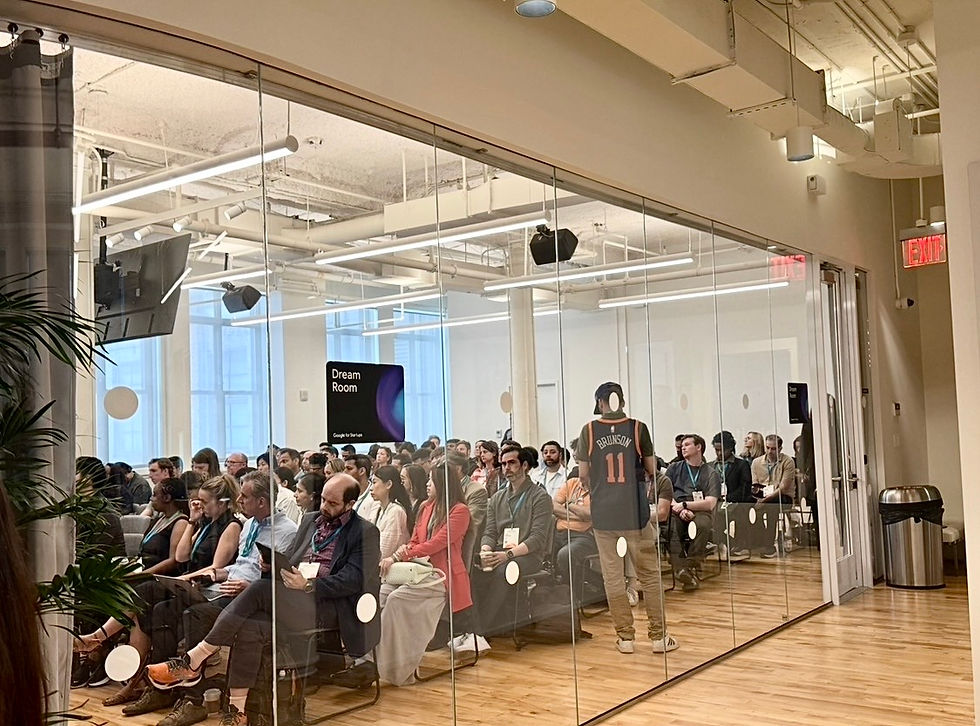
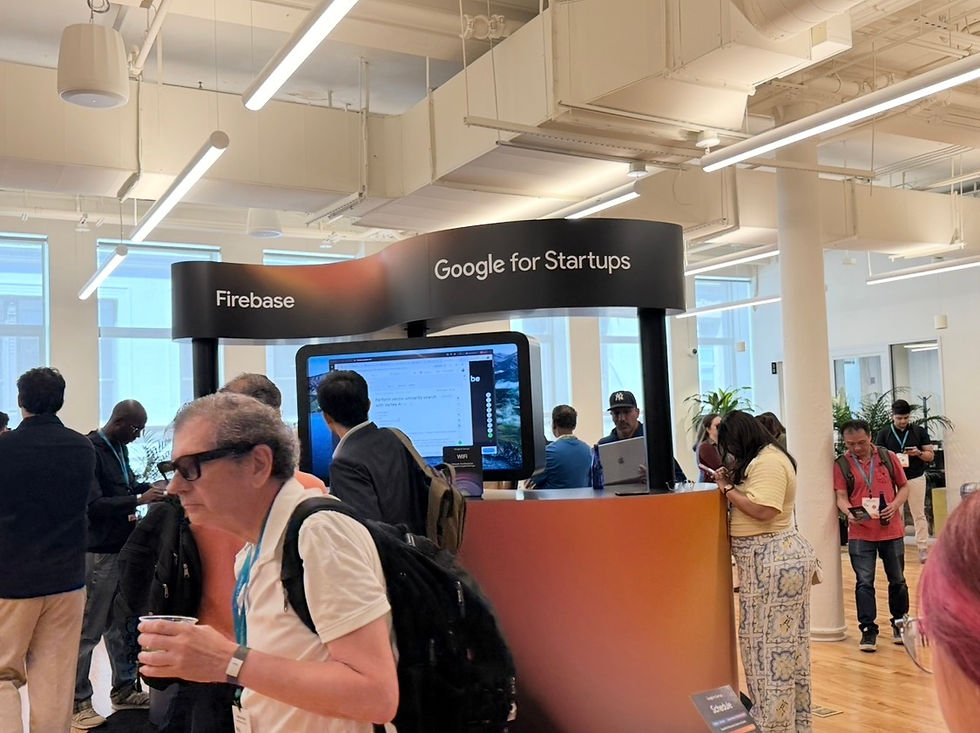
From the moment attendees entered the space, it was clear this wasn't simply another networking event. Comfortable workspaces, collaborative lounges, educational sessions, product demonstrations, and networking opportunities were woven together in a way that encouraged both learning and connection.
What stood out most wasn't the production quality, although it was excellent.
It was the focus.
Every session, demonstration, and discussion seemed centered around a single question:
How can founders build faster, smarter, and more efficiently in the age of artificial intelligence?

A Front-Row Seat to Where Startups Are Headed
Looking across the day's programming, several themes quickly emerged.
Conversations centered around AI transformation, autonomous agents, multi-agent systems, AI-powered marketing, startup scaling, cloud infrastructure, and the future of agentic experiences.
For founders paying attention, the message was difficult to miss.
Artificial intelligence is no longer being discussed as a future possibility.
It is rapidly becoming part of the operational foundation of modern startups.
One particularly interesting topic involved Google's Agent2Agent (A2A) Protocol, an emerging framework designed to help AI agents communicate and work together across different systems.
While highly technical on the surface, the implications for founders are surprisingly practical.
Imagine having one AI agent helping with customer service, another managing research, another supporting marketing workflows, and another handling internal operations. Rather than functioning independently, these systems have the potential to communicate, share information, and coordinate actions.
The result is something founders have always pursued:
More output without necessarily adding more headcount.
For bootstrapped founders and lean startup teams, that possibility is significant.

Understanding Google Cloud and Firebase
One thing I appreciated about Google's programming was that it wasn't simply showcasing AI concepts.
It was also highlighting the infrastructure that makes those concepts possible.
For many non-technical founders, terms like Google Cloud and Firebase can feel intimidating. In reality, they represent some of the building blocks powering today's startups.
Think of Google Cloud as the digital foundation behind modern businesses.
Instead of investing in expensive servers or managing physical infrastructure, startups can access computing power, databases, storage, analytics, security tools, and AI capabilities through Google's cloud ecosystem.
Whether launching a mobile app, hosting a website, storing customer data, processing transactions, or deploying AI-powered products, cloud infrastructure is often working quietly behind the scenes.
For founders, that means spending less capital on infrastructure and more time focused on building products and acquiring customers.
Firebase complements that foundation.
If Google Cloud is the infrastructure, Firebase is the builder's toolkit.
Through services like authentication, databases, analytics, hosting, notifications, and performance monitoring, Firebase enables development teams to move faster and spend less time reinventing the wheel.
For founders trying to validate ideas quickly, iterate products, and launch efficiently, those advantages can create a meaningful competitive edge.
Together, these platforms demonstrate how much more accessible technology has become.
Capabilities once reserved for well-funded enterprises are increasingly available to startups and small teams.
The Rise of the "Army of One" Founder
As I listened to conversations throughout the day, a larger theme began to emerge.
The barriers to building technology companies continue to fall.
Not long ago, launching a software company often required significant capital, a large technical team, and expensive infrastructure investments.
Today, founders have access to cloud computing, AI-powered development tools, intelligent agents, startup credits, and educational ecosystems that dramatically reduce those barriers.
That doesn't mean entrepreneurship is easier.
Building a successful company remains extraordinarily difficult.
What has changed is the amount of leverage available to founders.
A small team today can accomplish work that would have required entire departments only a few years ago.
Entrepreneurs are increasingly supplementing human talent with intelligent systems that support research, content creation, development, marketing, and operations.
In many ways, the "Army of One" founder is no longer just an idea.
It's becoming reality.
The Most Important Thing Google Got Right
While the technology discussions were compelling, one of the strongest takeaways from the day had less to do with AI and more to do with people. The Google for Startups team operated like a well-oiled machine.
From a production standpoint, it was clear that all hands were on deck. Team members were visible, approachable, organized, and actively engaged throughout the event. Questions were answered quickly, attendees were guided where they needed to go, and every transition felt intentional.
What stood out even more was something that can't be manufactured.
The team genuinely seemed to care about the experience founders were having.
At a time when many events can feel transactional, there was a noticeable sense of authenticity throughout the space. You could feel it in the conversations. You could feel it in the rooms.
And as someone who understands firsthand how difficult it is to produce an event at this scale while maintaining a high-touch attendee experience, that effort did not go unnoticed.
Ultimately, great events are rarely remembered because of stage design, catering, or even the agenda.
They're remembered because of how people felt while they were there.
Google for Startups deserves credit for understanding that distinction.
Founders weren't simply attending an event.
They were being welcomed into an ecosystem.
Beyond the Cloud
Beyond the discussions surrounding artificial intelligence, cloud infrastructure, startup tools, and emerging technologies, the experience served as a reminder that innovation is ultimately about people.
Founders need access to knowledge.
They need access to resources.
They need access to community.
Most importantly, they need environments where they feel supported as they navigate the challenges of building something new.
Google for Startups successfully created that environment during New York Tech Week.
By combining educational programming, practical resources, meaningful networking opportunities, and a genuinely founder-focused experience, the team delivered something many organizations strive for but few execute well:
A space where founders felt welcomed, supported, and empowered to continue building.


